How Did a Film Script End Up Shaping the Iraq War?
Somewhere in the reporting that fed the case for invading Iraq sat a description of chemical weapons that cinema audiences already knew by heart. It was not a foreign service's plant and it was not a forgery. It was a story that travelled unusually well, and the route it travelled by did as much work as the claim inside it. This is what happened to it, and why a well-made narrative so often outperforms a true one.
An intelligence report that read like a thriller
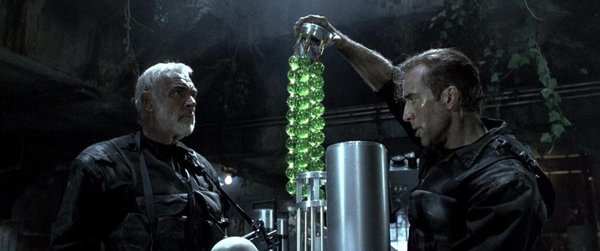
In the period before the invasion, a stream of reporting reached British intelligence describing what was going on inside Iraq's chemical and biological programme. It was welcome. What Iraq was making, and where, was the question everything else hung from, and here was somebody apparently close to an answer.
The reporting came at a remove. Not from a person standing in a production hall, but relayed onward through an intermediary. It arrived whilst the public case for war was being drafted. And it was specific in exactly the way intelligence officers like reporting to be specific: it described not only what was being made, but how the material was being kept.
Agent production continuing. The agent held in sealed glass containers, spheres rather than drums. Handled at arm's length with tongs, because of what a breakage would mean for anyone in the room.
None of that is absurd on its face. Glass is unreactive, sealed glass genuinely is used for hazardous material in laboratory quantities, and treating a container as something you never put a hand on is precisely the instinct a real chemist would have. The detail did what specific detail usually does: it made the account feel like the product of eyes rather than imagination.
It was also, close to image for image, a scene from a Hollywood action picture. Anyone who had been to the cinema in the second half of the 1990s had seen exactly that: green glass beads of nerve agent, handled with tongs, in The Rock.
The words that reached ministers had not changed in substance from the ones on screen. What had changed was the form they arrived in: not a film reel with a certificate on it, but an intelligence report, with a source, a date, and a circulation. In the cinema the audience knew where it stood. In the in-tray, nobody was watching anything; they were reading.
The reporting was eventually withdrawn as unreliable, and the withdrawal came after the invasion had already happened. The Iraq Inquiry report set the handling of it out in public, in the flat, procedural prose that such things are recorded in, long after the decisions it touched had been taken.
It is worth stopping on the puzzle before reading on. The account was thin, it came second hand, and its central image was one that millions of people had already sat through in a darkened room whilst eating popcorn.
Recognising a borrowed scene is not luck
The temptation is to file this under coincidence: somebody happened to have seen the film, and happened to say so. That is not what unpicked it. What unpicked it was the same unglamorous habit that unpicks a defaced Roman coin, a bedpan map, or a wellness video built on a genuine water quality report: taking a narrative apart until the join between what is verifiable and what has been supplied becomes visible, and then asking what the carrier is contributing that the content is not.
That is a discipline rather than a knack, and it does not care whether the artefact in front of you is a dossier, a hashtag, or a stranger's thread. Fiction has been crossing into policy for two thousand years. The delivery mechanisms change; the playbook barely does.
Learn the anatomy of disinformation
The course this case comes from teaches the analysis behind it: how truth and fiction are blended to make a claim stick, why the medium a claim travels in reshapes how it is received, and how narratives like this one are taken apart and countered.