How Did a Nursery in California Convince a Country That Satanists Were Coming for Its Children?
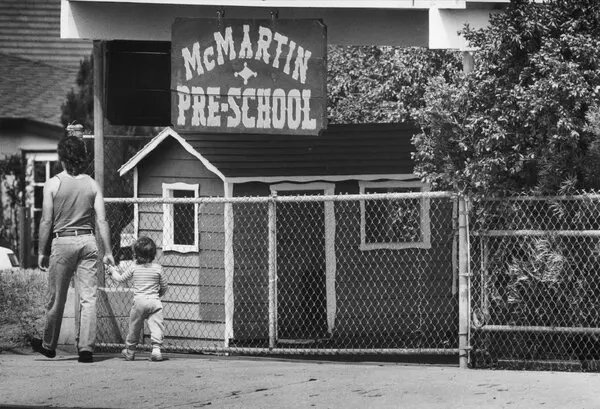
In 1983 a mother in Manhattan Beach told police that her son had been molested at the McMartin Preschool. Within a year the case had swollen to claims involving 360 children, flying suspects, and a network of tunnels under the building that nobody could ever find. By 1990 it had produced no convictions at all. The panic did not erupt: it was assembled in stages, and one ordinary-looking document from the first weeks shows the assembly happening.
The book that gave the fear a shape
Three years before the first McMartin allegation, a psychiatrist named Lawrence Pazder and his patient Michelle Smith published Michelle Remembers, presented not as fiction but as fact. Its contents were lurid to the point of absurdity: a child placed in a car with a dead body and pushed off a cliff, an eighty-one day ritual without food or water, demonic possession, human sacrifice. Journalists who later checked the names, the places, and the times found the whole thing debunked from start to finish. People simply were not where the book said they had been.
Pazder wrote a sequel with Smith, married her, and toured the world with the story, the Vatican included. The consensus is that Smith was not lying. She believed it. The interviewing technique her psychiatrist used had reached something closer to her dreams than her memories, and the result was published as established fact.
Then came the preschool. Police opened an investigation into Peggy McMartin Buckey and Ray Buckey, who ran it. And the investigating police chief wrote to the parents.
Dear Parent: This Department is conducting a criminal investigation involving child molestation. Ray Buckey, an employee of Virginia McMartin's Pre-School, was arrested by this Department.
The letter went out to the parents of children at the school after Ray Buckey's arrest and initial interview, before any of those parents had asked their own child a single question.
By 1984 the number of allegedly abused children stood at 360, which is a great many bodies for a small preschool. The investigation ran from 1984 to 1987. The trials ran from 1987 to 1990. Ray Buckey spent five years in prison without ever being convicted of anything; his charges were dismissed and Peggy Buckey was acquitted on all counts. The bill to the American taxpayer came to fifteen million dollars.
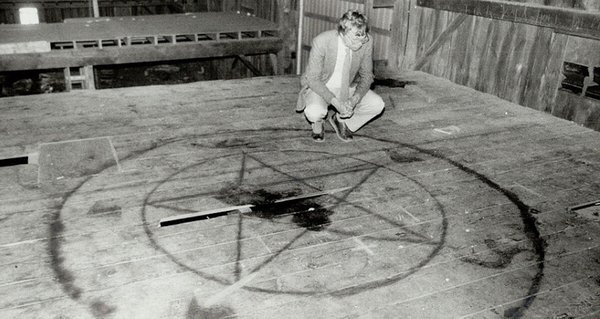
What sustained it, in the absence of any physical evidence, were the children's statements: that Ray had flown through the air, that there were tunnels beneath the school where children were taken, that they had been taken on rides in hot air balloons and aeroplanes, that Chuck Norris was one of the abusers, that children were flushed down toilets into special abuse rooms. All of this within a preschool day that ran from nine in the morning until half past two. Investigators went to the school, found no tunnels, and dug it up looking for them. There were none, because there had never been any.
Michael P. Maloney, a clinical psychologist and professor of psychiatry, reviewed the videotapes of the children's interviews and testified for the defence. He called the techniques improper, coercive, directive, problematic, and adult-directed in a way that forced the children to follow a rigid script. Many of the children's statements, he concluded, had been generated by the examiner. His testimony is credited with bringing the case down.
Years later one of those children wrote a piece in the Los Angeles Times titled 'I'm sorry'. Any time he gave the interviewers an answer they did not like, he said, they would ask again and encourage him towards the answer they were looking for. It was obvious what they wanted. They told him he was smart, that he could help the other children who were scared. He felt uncomfortable and a little ashamed of being dishonest, but he thought it was what the adults wanted him to do.
Careers grew on top of it
Whilst the trial ground on, the panic acquired professionals. In 1986 a man called Phil Phillips went on television to warn parents that My Little Pony, Care Bears, and He-Man were instruments of satanic indoctrination. He had no relevant academic credentials whatsoever. He had a book, an appearance, and conviction. Boycotts followed.
Patricia Pulling came to it through genuine tragedy: she found her young son dead by suicide and believed Dungeons and Dragons had played a part. She founded an organisation against the game, which was her right. What followed was not: she came to be treated as an occult expert, appeared in trials tied to the panic, and advised police forces on satanic imagery. The game designer Michael A. Stackpole took her apart in The Pulling Report: 'Her methods and tactics at their very best taint any evidence she might offer, and at their worst construct a monster where none exist.'
The counter-example sits right beside it. Stephen King, learning that his novel Rage had been found amongst the effects of school shooters, said plainly that his book had not turned anyone into a killer, but that he could see it as a possible accelerant, and pulled it from sale.
Read the question, not the answer
Testimony arrives looking like a finding. It is easy to spend all your attention on what a witness said and none at all on what was put to them. Before you weigh what a witness said, read what was put to them, and ask whether the asking could have produced the answer.
Apply that to this case and the famous absurdities stop being the interesting part. The tunnels, the hot air balloons, Chuck Norris: those are answers, and they were bizarre answers, which is why everyone stared at them for seven years. Maloney did not stare at the answers. He watched the questions, and found statements that the examiner had put there. The child who apologised in the newspaper described the same mechanism from inside it: he was asked again until he produced what was wanted, and praised when he did. The same test runs backwards through Michelle Remembers, where a psychiatrist's technique reliably produced the abuse it had gone looking for.
So the nursery convinced nobody of anything. A fabricated memoir gave a diffuse fear a narrative shape. A police letter handed every parent in the school the conclusion before they asked their first question. Interview techniques rewarded children for repeating it. Self-appointed experts with books and television slots turned the whole thing into a livelihood, and institutions full of qualified, professional people ended up citing flight without a broomstick as evidence of a material crime. Each stage was ordinary. Stacked, they cost a man five years of his life and the taxpayer fifteen million dollars.
Noticing that letter is not a knack for spotting nonsense, and it is not hindsight. It is one move of a method, the one you have just performed: hold the answer aside and read what was put to the witness. The rest of that method is what makes it work on a case nobody has already solved for you, on claim-makers who are still active, and on narratives whose absurdities have not yet had forty years to become obvious.
The Anatomy of Disinformation
McMartin, Michelle Remembers, the toy box scare, and the Dungeons and Dragons crusade are taken apart in full in this course, alongside the structure that every one of them shares: how a panic is built, who builds it, what it is built to make people do, and how to take a live narrative apart the same way.